
For HYTE Customers
HYTE Portal
Support is just a click away.
Open tickets, share files, watch training, and read release notes in one place. Choose your portal to sign in.
Inside the Portal
What you can do in the HYTE Portal
As a customer of HYTE, you have access to these features within the HYTE Portal.
-
Modern ticketing
Open tickets and track each one through to resolution in one organized place.
-
Ticket update notifications
Subscribe any member of your organization to ticket updates so your whole team stays informed.
-
Secure File Drop
Add attachments to a ticket through a secure, unique link. The link requires no login.
-
Data life cycle management
Set how long each attached file stays accessible in the portal. Files are permanently deleted at the end of the expiration period.
-
HYTE MQ, ActiveMQ, and HYTE Console training
Your subscription includes hours of training videos, from messaging terminology and theory to hands-on, workbook-style classes.
-
HYTE product release notes
Read detailed release notes for HYTE products and see the latest features and improvements as they ship.
Need help signing in?
Contact HYTE and we will get you into the right portal.

Apache ActiveMQ 6.3.0 swaps a synchronized method for a ReentrantLock and moves subscriber dispatch out from under it. JMH benchmarks against 6.2.8 show up to 68% more topic send throughput, and up to 93% with the broker virtual thread runner on JDK 25.

In short: Apache ActiveMQ rarely makes headlines, but after 20+ years it remains one of the most widely deployed open source message brokers in production. For enterprises it lowers total cost of ownership, avoids proprietary vendor lock-in through open standards (AMQP, MQTT, STOMP, OpenWire, REST, WebSockets), consolidates multiple messaging patterns onto one platform, and offers a low-risk path off costly IBM MQ licensing. Its late-2025 move to independent Apache governance makes it a safer long-term bet, not a riskier one.

Matt Pavlovich discussed the benefits of messaging gateways, emphasizing their role in reducing human touchpoints and simplifying application development. He highlighted the importance of centralizing applications across physical locations to handle network performance and availability issues. Pavlovich shared his experience with ActiveMQ, mentioning the upcoming 6.0 release with virtual thread support. He also discussed the shift from orchestration to choreography, the introduction of batch queues, and the need for stricter platform policies to improve developer experience. The discussion also covered the importance of security, cost-effective monitoring, and the potential for industry standardization to streamline messaging adoption.

Matt Pavlovich, in his final post on this series topic, discusses the migration of ActiveMQ to the Jakarta framework and outlines the challenges encountered during this process. It highlights the need to modernize the codebase, address technical debt, and upgrade frameworks like Jetty, Spring, and others to support Jakarta. The piece also emphasizes the introduction of transitional modules to support users during the migration, while noting the effort involved in ensuring backward compatibility and preparing ActiveMQ for future updates.
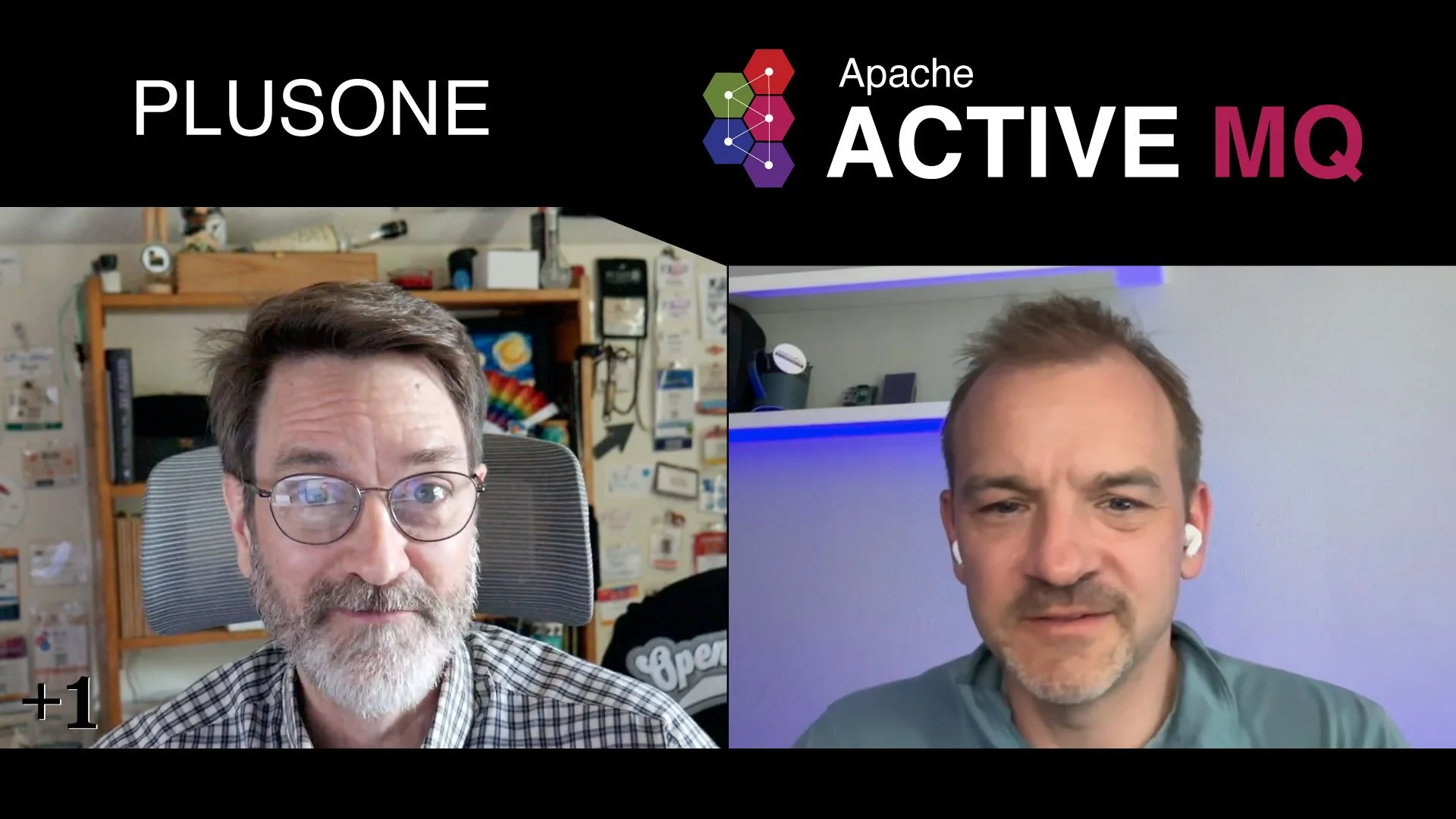
Rich Bowen and Matt Pavlovich discuss the evolution of ActiveMQ Classic, highlighting the transition from Java to Jakarta ecosystem and the release of ActiveMQ 6.0, which introduced Jakarta support and JMS 2.0. ActiveMQ 6.1 focuses on fixes and observability improvements, with 6.2 set to introduce a new configuration system and virtual threads

HYTE Readings: Explore our curated collection of must-read articles, handpicked to keep you at the forefront of the latest in technology and messaging trends from around the web.
Apache ActiveMQ, a mature and open-source message broker, supports a range of protocols including JMS, MQTT, STOMP, and AMPQ, with updates to JMS 3.1 and 2.0 in its latest versions. Offering multi-protocol and multi-language capabilities, along with scalable deployment options such as standalone, clustered, and primary failover brokers, ActiveMQ is designed for extensive adaptability and DevOps benefits in application development. Matt Pavlovich from HYTE Technologies, a key contributor to ActiveMQ, highlights its ease of integration testing within application code, ensuring reliable end-to-end messaging testing for app development teams.

HYTE Readings: Explore our curated collection of must-read articles, handpicked to keep you at the forefront of the latest in technology and messaging trends from around the web.
Digital transformation centers on swiftly adjusting business functions to match fluctuating market scenarios and prospects by rapidly integrating and modifying business applications. Event-driven architecture facilitates this by allowing organizational and system decoupling, utilizing events to announce data changes or actions, providing design and runtime operational resilience, complementing API architecture which excels in read, search, and query use-cases.
After more than 20 years as a cornerstone of enterprise messaging, Apache ActiveMQ is entering a new era of fully community-driven development. A late 2025 decision to split ActiveMQ and Artemis into separate Apache Top-Level Projects gives ActiveMQ the autonomy to evolve independently—free from corporate roadmaps and guided solely by the Apache Way. With support for industry-standard protocols like AMQP, MQTT, and WebSockets, ActiveMQ remains as relevant as ever for modern IoT, microservices, and event-driven architectures.